


Trimbio
-
Semi Automatic Defibrillators – Choosing the Right AED Type for Your Setting
Semi Automatic Defibrillators: Choosing the Right AED Type for Your Setting A semi automatic defibrillator gives trained responders one extra moment of control during a cardiac emergency. For many clinics, sports therapy centres, physiotherapy practices and workplaces with first aid-trained staff, that matters. The device still analyses the heart rhythm and talks the responder through each step, but the final... -
Fully Automatic Defibrillators – No Button to Press, No Hesitation
Fully Automatic Defibrillators: No Button to Press, Less Room for Hesitation When someone collapses, the first few minutes feel very fast and very slow at the same time. People freeze. Someone shouts for help. Someone else starts looking for the AED. Even trained staff can feel the pressure when a real cardiac arrest happens in front of them. That is... -
AEDs (Automated External Defibrillators) – Buying Guide for UK Clinics and Workplaces
AEDs (Automated External Defibrillators): A Practical Buying Guide for UK Clinics and Workplaces When an AED is needed, there is no time for confusion. The device has to be easy to find, ready to use and familiar enough that the first person on scene does not freeze. That is why buying an AED (Automated External Defibrillator) is not only a... -
AED Cabinets, Brackets, Signs and Carry Cases – Storing Your Defibrillator Correctly
AED Cabinets, Brackets, Signs and Carry Cases: Storing Your Defibrillator So It’s Ready When Needed An AED can only help when people can find it, reach it and use it quickly. That sounds obvious, but in real clinics, sports clubs, schools and workplaces, AED storage often gets treated as an afterthought. The device is bought, placed “somewhere sensible”, then left... -
Out-of-Date AED Training Electrodes – Cost-Effective Practice for CPR Teams
Out-of-Date AED Training Electrodes: A Smarter Way to Practise Pad Placement Training sessions can get through a surprising amount of kit. Pads are opened, handled, repositioned, passed between learners and used again across multiple scenarios. For first aid trainers, workplace safety leads and clinical teams running regular refreshers, that can make consumables a real cost. That is where Out-of-Date AED... -
AED Defibrillator Batteries – Replacement Guide for UK Clinics and Workplaces
AED Defibrillator Batteries: The Small Part That Decides Readiness AEDs (Automated External Defibrillators) can sit quietly on a wall for years without being used. That is exactly what everyone hopes for. But when it is needed, it has to work straight away. That readiness depends on two simple things: pads that still adhere properly and a battery with enough charge... -
AED Training Electrodes – Practise Safe, Respond Confidently
AED Training Electrodes: Small Kit That Makes AED Practice Feel Real AED training can look very polished in a classroom. Everyone stands around the manikin, the AED trainer talks clearly, the pads go on neatly, and the scenario runs as expected. Real emergencies rarely feel that tidy. People hesitate. Clothing gets in the way. The room feels crowded. Someone has... -
AED Defibrillator Electrode Pads – Choosing the Right Pads for Your Device
AED Defibrillator Electrode Pads: How to Choose, Check and Replace the Right Pads AEDs are designed to be simple in an emergency, but the equipment behind that simplicity still needs proper checking. One of the easiest things to miss is also one of the most important: the electrode pads. For clinics, sports facilities, workplaces and community sites, AED Defibrillator Electrode... -
AED Defibrillator Accessories – Everything You Need to Keep Your AED Compliant
AED Defibrillator Accessories: The Small Parts That Keep Your Device Ready An AED sitting on the wall gives reassurance. The real test, though, is what happens when someone opens the cabinet. Are the pads in date? Is the battery ready? Can the responder find the device quickly? Is the carry case stocked properly? Has anyone checked the status light this... -
Ultrasound Therapy - What is it?
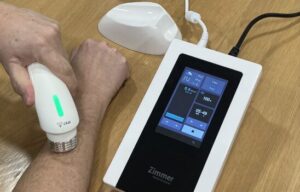 What Is Ultrasound Therapy? Ultrasound therapy is a non-invasive treatment that uses high-frequency sound waves to support the healing of injured soft tissues, including muscles, tendons, and ligaments. These sound waves operate at frequencies above human hearing and create gentle mechanical vibrations within the body. In clinical practice, therapeutic ultrasound typically uses frequencies between 1 and 3 megahertz (MHz...